Disaster Risk Reduction
Mainstreaming Disaster Risk Reduction
Reliance Foundation’s Disaster Risk Reduction (DRR) approach focuses on mainstreaming risk-informed village-level planning and Nature-based Solutions (NbS) into sustainable rural development.
These initiatives aim to integrate Village Disaster Management Plans (VDMPs) with Gram Panchayat Development Plans (GPDPs) for leveraging government resources for localised risk reduction. NbS are promoted to reduce hazard exposure and enhance sustainability through interventions such as mangrove plantations as bio-shields in the coastal region, drought-resilient fodder systems for livestock in arid regions, and the plantation of various shelterbelt species.
In parallel, the programme emphasises climate-resilient livelihoods by leveraging knowledge resources to strengthen awareness and capacity around adaptive livelihood and crop protection practices, thereby enhancing community resilience, economic stability, and sustainability for long-term rural livelihoods.
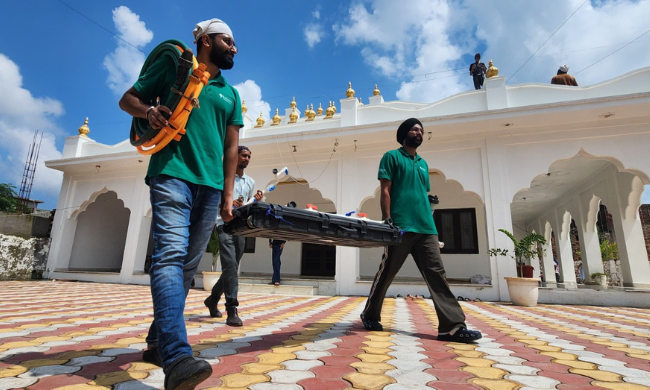
Reliance Foundation integrates Disaster Risk Reduction by using both advanced GIS-based tools and community-led hazard, risk and vulnerability assessments. GIS analysis is used to create hazard line maps and digital elevation models that help simulate disaster scenarios and support planning efforts. These insights strengthen community understanding of risks and inform local decision-making.
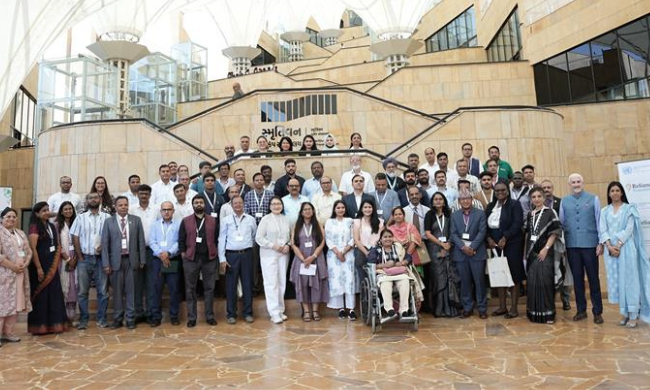
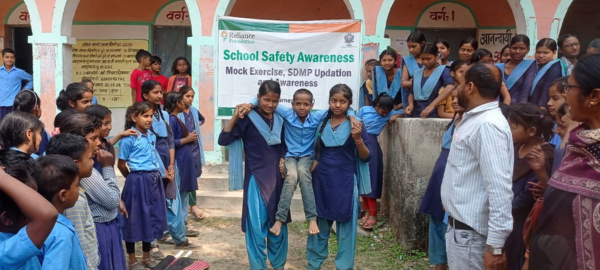
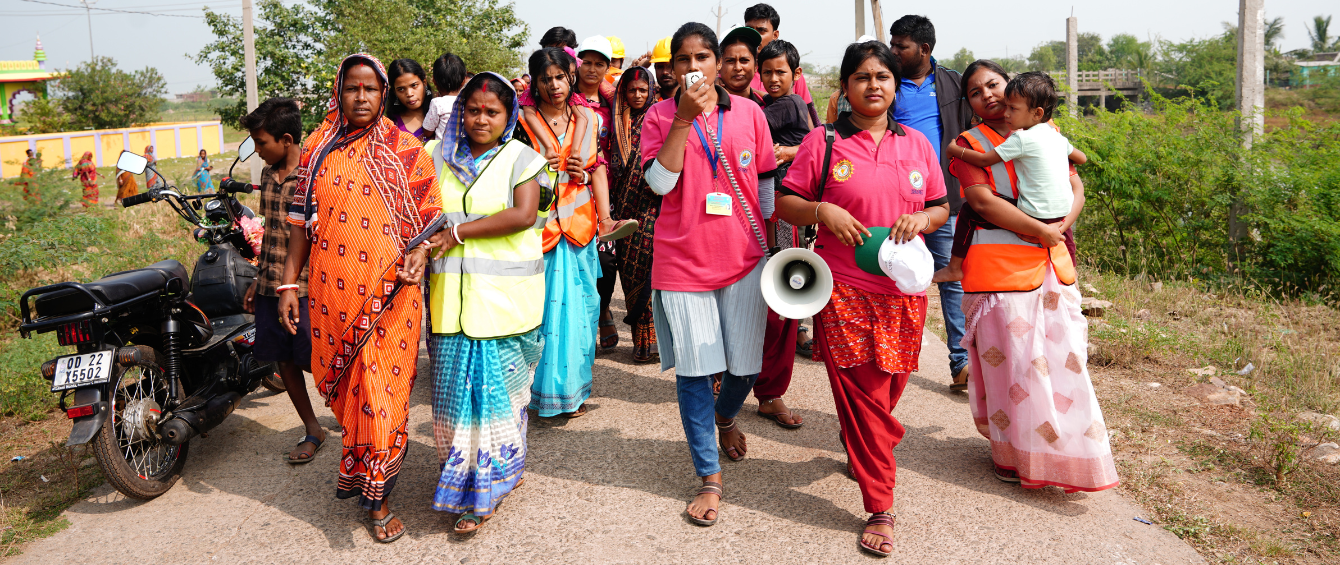
At the last mile, disaster management planning is designed to be community-led, inclusive and participatory. Integrating these plans with development programmes ensures that DRR is mainstreamed into long-term community development.
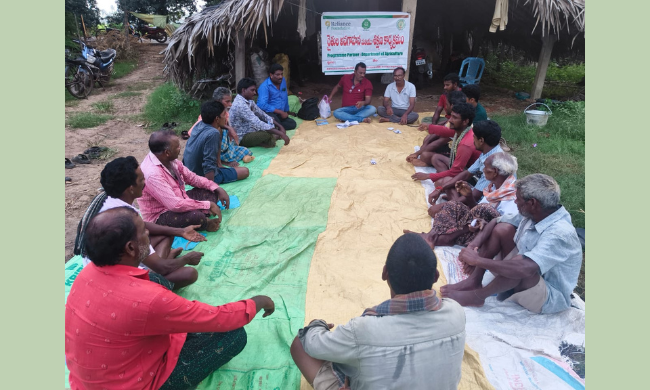
Community-led Hazard, Risk and Vulnerability Analysis (HVRA): Using GIS-based macro-level HVRA, hazard line mapping and DEM models, communities participate in analysing historical disaster impacts and the evolving risk landscape. Through participatory rural appraisal techniques, communities assess their exposure to hazards, socio-ecological factors and the resulting vulnerabilities and resilience levels.
Village Disaster Management Plans (VDMPs): Insights from community-led HVRA processes are used to develop and update VDMPs. These plans document the village’s hazard history and current vulnerabilities, and outline preparedness measures to mitigate future risks. VDMPs serve as essential tools for both administration and communities during emergencies, providing clarity on resources and response mechanisms.
Integration into GPDP: Integration of Village Disaster Management Plans into Gram Panchayat Development Plans ensures that disaster risk reduction is embedded within local development priorities and budgeting processes. This alignment strengthens risk-informed governance by enabling communities to proactively address hazards while leveraging government schemes for resilient and sustainable development.
Nature-Based Solutions for DRR
Reliance Foundation promotes bio-shields and mangrove plantation as nature-based solutions to reduce communities’ exposure to hazards. These initiatives are community-owned and community-driven, bringing together experts, technology and local leadership to strengthen resilience.
The programme supports site-specific interventions such as creating bio-shields along ocean and riverbanks, which offer natural protection against cyclonic storms, tsunamis, high winds and soil erosion. Community-led mangrove nurseries, natural regeneration practices to address fodder scarcity in drought-prone areas, and ecosystem-based approaches are used to build socio-economic and environmental resilience.
In Odisha, a community-led mangrove nursery has been established to ensure seedlings receive periodic tidal inundation for healthy growth. A sapling stocking mechanism helps address plantation losses and contributes to sustained mangrove conservation.
Across Odisha, Gujarat, Assam and West Bengal, around 40,000 saplings, seeds and mangrove hypocotyls have been planted. Interventions include mangrove plantation in coastal areas of Odisha and West Bengal, cactus plantation to support livestock fodder requirements in Gujarat, and vetiver plantation for flood and erosion control in Assam.